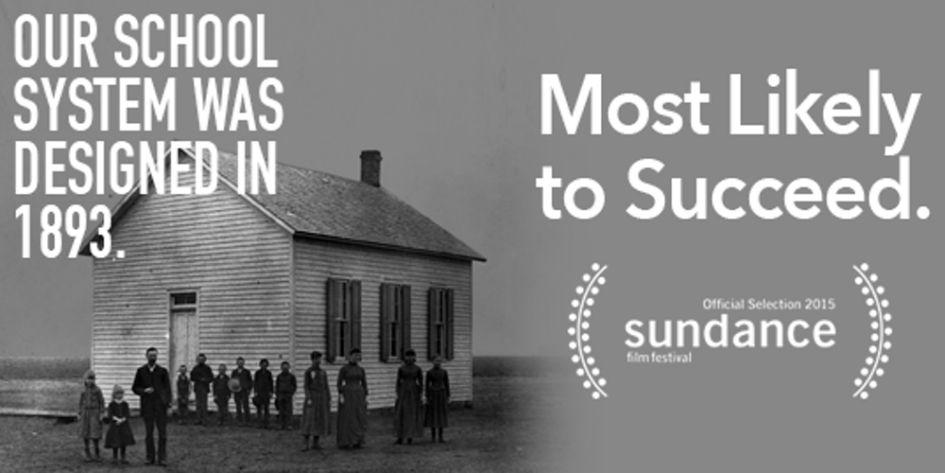
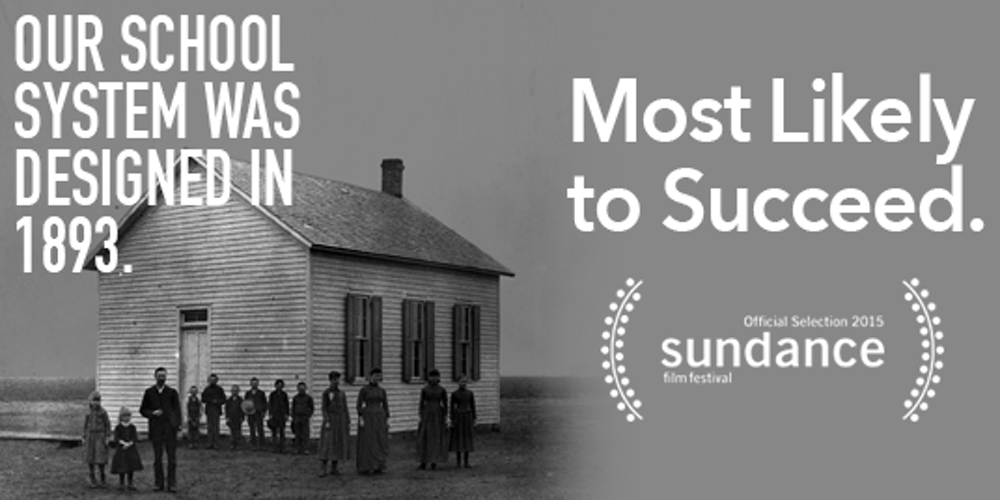
Most Likely To Succeed focuses on an innovative high school in San Diego, California High Tech High. The school itself is an inquiry into why older schooling models do not guarantee students into at least the middle-class. The film recognizes that only time can prove whether the inquiry and project-based learning model effectively prepares children for their future. Since the film’s release in 2015, I am curious if more research is available.
My biggest takeaway from the film is seeing students adapt to a new style of school within a year and find joy and self-determination in their work. It reminded me of how curious and accepting toddlers are as they ferociously learn to navigate their world and strive for independence. That spark, or “grit,” as the movie calls it, is rooted in perseverance. Angela Lee Duckworth recognized grit as a predictor of success in her 2013 Ted Talk. From my experience as an early childhood educator, I feel that children are born with this intense desire to learn and be social. Thinking back to my childhood, I remember there being a shift around middle school when my biggest goal was to make it through the day instead of continuing on a path of innovation and self-expression.
Similar to the group of students interviewed in the film, I also wanted to be taught to pass the test. I remember teachers going over test-taking strategies like they were equivalent to the learning content. In 8th grade, my school conducted a mandatory standardized career aptitude test. Once they were graded, we were given a score sheet with a career best suited for us. The results looked like a big circle with a variety of jobs. My result was in the middle, also known as inconclusive or what felt like a failure. I hope this test has been phased out of schools now. Many years later, I still remember this test. Instead of the regurgitation of facts, the experiences, feelings, and relationships have been the most memorable.
Some questions I have after watching:
- How are the students in this film doing now?
- How do graduates feel about their school experience at High Tech High?
- How can this approach be applied to younger grades?
- How does this compare to the Canadian public school experience?
- How can teachers balance basic knowledge, the student’s interests with family and government influence?
Leave a Reply
You must be logged in to post a comment.